
The Sound of Vinyl
Why buying a vinyl player was a question my friend asked me! Honestly, I had no idea about the difference as I was growing up in the era of the cassette. Later on, CDs entered the scene and now everyone is streaming everything online. Maybe I am what people would call – old school, I told him that I want to hear the real sound as it was recorded and to proudly own a huge collection of records like many people had done for years and experience my favourite reggae music in a deeper level. So, later that day I found myself searching for more information about Vinyl records and Digital.
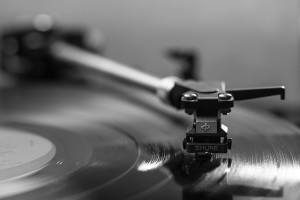 The vinyl is mirroring the original sound waveform and is analogue, while CDs, online streaming are all digital and some sounds might get lost and you could get easily surprised on how much you’ve missed, especially on old but gold classics. Even the original recordings of musicians, which may have been recorded on tape or digital methods, are sometimes re-issued on vinyl. All sounds are just vibrations in the air, but the vinyl sound is richer and, in my opinion, it makes you feel more connected to the artist.
Since the 1940s the phonograph, in its later forms also named a gramophone, has been known and called a record player or turntable. In its essence, it was a device for mechanical recording and reproduction of sound. It was invented by Thomas Edison in 1877, lots of advancements were made on it in the years to follow. It used to have phonograph cylinders instead of flat discs and the devices were gradually getting smaller and smaller in size. You can learn more about the rich history behind it here.
Choosing a Turntable
I believe there was some decline on record sales before, but If you go to a music store now, you can see people of all ages buying vinyl. Just a few months ago I was in one of those big stores and I remember how pleasantly surprised I was at seeing so many young people, at my age and even younger, going through the records. It is true that streaming is the much more affordable option nowadays, but for a true music lover the experience is what matters!
And now, the question is what kind of turntable to buy, there are so many different options out there, that at first, I am honestly confused, I do not know what to search for. My parents grew up with vinyl, but they had those huge ones, that take a whole lot of space and I have seen in stores these days much more compact, colourful options and so on. There are too many brands available, different models and at a different price range. I understand that some turntables perform better than others and my biggest fear is to own a valuable and rare record and to get it ruined at the end by playing it on a bad player. For me this as a hobby and I don’t really need the most expensive kind with too many features, at the same time the cheapest models seem like too good to be true, so the medium-priced ones are probably the best option in my case. So that’s it, it is decided!
Caring for those Records
But of course, having a record collection requires some knowledge and care as it has certain disadvantages. For example, mould could grow on vinyl and it could spread from one record to another and that is why they must all be stored in a humidity-controlled environment. Another problem is that they could easily get damaged during playback and this is going to compromise the sound quality. Because we all want to be able to enjoy our precious collections for a long time, hopefully life-long, I have gone through all the information I could possibly find. The first thing is to always store them in a vertical position and in their sleeve and covers, in order to avoid much access of the records with air and dust. A record sleeve can be made of paper, cardboard, rice paper, polypropylene etc., can be acid-free or anti-static and also contain an inner liner. If the sleeve that the record came with is too basic and doesn’t seem like big protection, there are some cost-effective sleeves sold wildly. Cleaning is also a must, especially if you bought used record. Another important thing to get used to, while taking them out if their sleeves, is to avoid touching any part of the record that contains a playable groove as the natural oils from our skin doesn’t do good with the surface of the vinyl.
It all looks like too much trouble maybe for some, but for me, it is all worth it, because listening to albums like Catch A Fire and Kaya by Bob Marley & The Wailers, Ska Boo-Da-Ba by Skatalites, Heart Of The Congos by The Congos, Funky Kingston by Toots And The Maytals, Trenchtown Mix Up by The Gladiators and albums of some of my all-time favourite reggae artists, on a vinyl is a whole other experience and I can imagine myself browsing through them while sitting on the couch, choosing the right one and getting lost in the sound. Seems cool, doesn’t it?
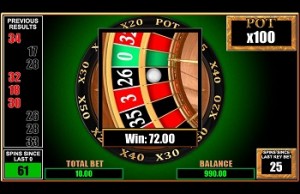 Second, I liked roulette so much that I never stopped playing it. If anything, I got better at it. I accepted the foreign language challenge with the French bets and learnt some phrases in the language of love. I wanted to see where roulette would get me. It got me somewhere alright. Someplace awesome, too. Get this: our long weekend in Barbados is paid in full by my roulette winnings! How cool is that? Not only do I get all the thrill of playing online roulette but it’s already making my life better.
 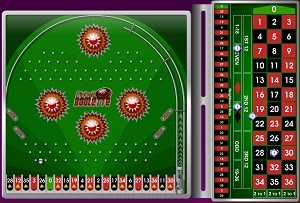 I gave French and American RNG roulette a try but found them both boring. Thought the French bets kinda nice, though, once you know which is which, of course. I really enjoyed Pinball Roulette – that’s what I call a game of chance! However, I quickly saw how the game could be improved. Imagine a game, in which a jukebox replaces the pinball machine! A Jukebox Roulette would be sweet! Yah, mahn! Naturally, it would have to play reggae.
 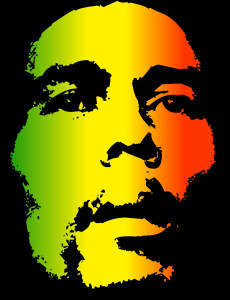 Robert Nesta Marley was born in 1945, in a small village in the Saint Ann Jamaican parish, called Nine Mile, where he also spent the first 12 years of his life. The rural life might have not offered him commodities like electricity but had a profound influence over his philosophy, identity and music. At the age of twelve, his mother moved with him to Trench Town, a neighbourhood in Kingston which is as dangerous, poor and violent as it is culturally-rich and talent-loaded. Though Bob went to bed hungry many times during his teenage years, he valued extremely his life and experience in Trench Town which provided him with endless inspiration for his future career. Even when he got rich and famous, he didn’t forget his humble roots and continued visiting the neighbourhood.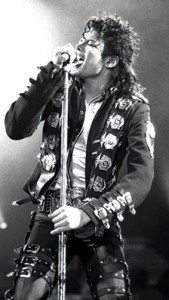
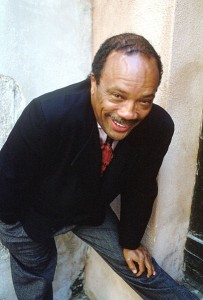 Quincy was born in 1933 in Chicago. When he was little his mother suffered a mental breakdown, after which she was committed to a mental hospital. His father took Quincy and his brother to their grandmother in rural Kentucky where they lived for a year. The place was extremely poor – no water, no electricity, no heat… According to Quincy’s words, there were times when they’d eat rats for lack of anything tastier to put their hands on. Not that life was much easier when they got back to Chicago – the black ghetto wasn’t the safest place to grow up. His only escape was music which became his life. He tried all possible instruments in school until he settled on the trumpet. He soon joined a band and the success wasn’t slow to follow.
 Grosvenor Casino is one of the few gambling companies in the UK that operates both land-based locations and online casinos. Due to this fact, it’s also one of the most popular ones. On top of offering great games to both players that enjoy online gambling and ones that prefer to play in real life, Grosvenor often organises great events its over 55 brick-and-mortar locations, events that combine live music, comedy, theatre and, of course, gambling. And this time around, it’s the turn of the Sheffield locals to enjoy such an evening. I’m talking about the
  The Zika virus, while not nearly as serious as other viruses that spread recently, such as ebola, can still cause a whole lot of trouble in a person who gets infected. The symptoms include fever, rash and fatigue (so basically like a typical Tuesday for me) and they usually clear up in a week, but the worst part, which is what has made health authorities everywhere go on high alert, is that if a pregnant woman gets infected with Zika (or Zik V, as it’s sometimes referred to), her baby might be born with an otherwise extremely rare birth defect known as microcephaly. To put it simply, babies with microcephaly have underdeveloped brains and a smaller head, and I don’t need to be a doctor to tell you precisely why this is bad. While the Zika virus is of little danger to the mother, it can potentially destroy her child’s life, which is why health authorities everywhere have banded to raise awareness of the virus and give tips on how to reduce the chance of infection.
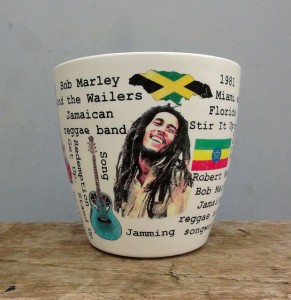 Sadly, while reggae still has a whole lot of fans out there (hello, world!), it’s far from the most popular musical genre out there. Certain genres, such as rap, rock, pop and, as of a few years ago, dubstep and electronic, have always been the more popular options when it comes to what the people prefer. Still, that’s both a blessing and a curse. It’s a curse for obvious reasons – less fans means less tracks being made, and less tracks being made means less exposure, and less exposure means less fans, you get the idea. But it’s a blessing because the low exposure makes the reggae sound very unique. Now, of course, we all know that reggae sounds unique in general, but so do the other music genres – metal, for example, is also quite different, and yet since it’s so popular and used in so many products of media people have grown desensitized to it. Reggae, on the other hand, can be used to craft moment that define the entire experience.
 In the welcome post of my blog, I said I wouldn’t bother you with too many details about myself, but when I started doing a research for an article about the greatest reggae artists and songs, I changed my mind. The reason for this is that I saw that I cannot contribute much to what’s already out there. If you google-search ‘greatest reggae artists’, you’ll find more than enough great articles rankings pretty much the same singers as the top 10 in the genre: Bob Marley always at the top (duh!), then Toots, Gregory Isaacs, Peter Tosh, Jimmy Cliff, Tanya Stephens, Burning Spear and so on. On top of that, on Wikipedia you can find a pretty exhaustive
  If you’re here, chances are that you either love reggae or that you’re curious enough to look it up and somehow stumble upon my page. Well, I’ve got good news for both of you – you came to precisely the right place! Welcome to Reggae Reviews, where I’m going to be posting various articles related to one of the most pleasant-sounding musical genres out there. We’re going to be looking at the, frankly, very confusing and strange history of it, we’ll be examining some of the best, classic albums and what made them so amazing, we’ll be keeping you up to date with the latest releases in the reggae scene… Oh, and, um… Hmm, there was something else, something important, but what was it… Right, of course – we’ll be reviewing a whole ton of reggae albums and singles!